

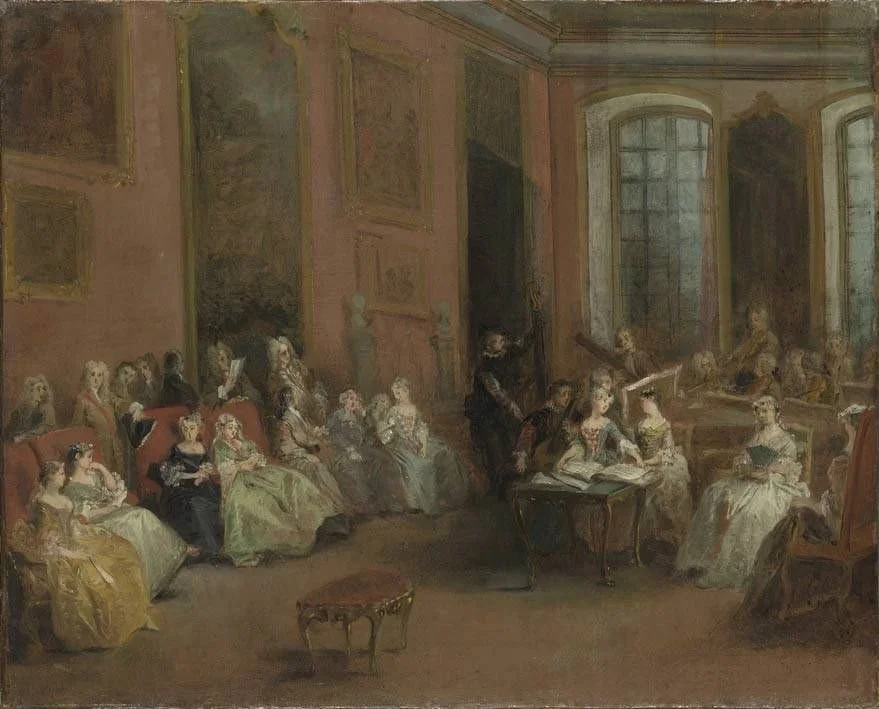
By Nicolas Lancret - https://www.sammlung.pinakothek.de/en/bookmark/artwork/9pL30EKjGe, Public Domain, https://commons.wikimedia.org/w/index.php?curid=66331630
Rondo Chevalier de Saint-Georges Grade 2 ABRSM 2025 – 2026
Character/story of the piece – in this piece the player could imagine that in the first section the person is outlining to someone else a problem that they have. In the first phrase they sound a little diffident and unsure, however, in the second phrase, the person restates the problem but with more insistency. In the middle section, the two people have an exchange, with the first person represented by the repeated Ds and the second person by the remaining melodic material. In the return of the original music in the third section the first person, although they still have the problem, they are looking at it in a different manner. In addition to this, the player should consider the use of instruments for each part considering that it was originally written for the harpsichord and strings.
The player must convey a sense of delicacy and gentility. The player could imagine that they are playing a violin; they could imitate the gestures a violin player would use.
Form - as already discussed, this piece is in ternary form with the first and third sections being the same. The piece commences and ends in the key of G major. There is a delightful chromatic pattern at the end of bar 4. At the beginning of the second section there is a change of key to D major with the composer preparing for this move with an emphasis on the dominant note of G major. By bar 17 the music is in D major, and the section ends on the tonic of D major and the dominant of G major. The last section is the same as the first section, so there are no changes of key.
Main part of the music – this should occur at the end of bar 19 at a fortissimo level although this dynamic should not be maintained for very long. Any dynamics applied in this piece should be considered in relation to the instruments it was originally written for and the musical period in which it was written.
Phrasing - as would be expected from a piece composed in the Classical Period the phrasing is balanced in the outer sections. These sections contain two phrases, each four bars long. There is similarity between the two phrases as each commence with the same material with only the final bar of each phrase being different. However, in the middle section the phrasing is interesting with there being three phrases containing four bars, five bars and six bars long. The final phrase within this section commences on an upbeat, which provides this phrase with a degree of urgency and drama. These phrases do not balance each other but are instead episodic in character.
Tempo, time signature and rhythmic patterns – the tempo of approximately 88 crotchet beats per minute is an excellent suggestion. This music requires a flow and momentum which this tempo provides. There could be a slowing where the semiquaver patterns are played in bars 4 and 27. It is interesting to note the arrangers use of the duple time signature as this music could sound somewhat march-like as a result. To a certain extent the player could imagine that some of the bar lines in some areas, such as in the outer sections, are removed. As a practise idea, the player could experiment with playing the piece in duple time and in quadruple time with the metronome. However, at the start of the second section there is a definite feeling of duple rather than quadruple time. There is a possibility that the player could play the crotchets, such as those in bar 9, too quickly. And the quaver and two semiquaver pattern could possibly be played too slowly. Bars 23 and 24 could be played without acknowledgment of the rest.
Touch/articulation – here the player will need to employ a slightly intense touch with well curved fingers supported by the hand, wrist, arm and shoulder. A little weight from the shoulder should be used when playing the strong accents in bars 9 - 10 and 13 - 14; these bars should sound as if a trumpet is playing. The notes that are detached need to be played with a gentle staccato with the use of a bounce from a relaxed R.H. wrist. The detached notes that are part of a slur need to be played with a lift with the fingers in contact with the key as it is lifted. The L.H. in the first section requires a gentle legato touch with the fingers barely lifting off the keys. In the second section the L.H. becomes more melodic in character with it either playing notes in unison or playing notes that are a third or sixth lower. In these instances, the L.H. will need to use the same touch as the R.H. considering it is playing the same material albeit a third or sixth lower. At the end of the second section, the L.H. has two sets of thirds to play; here the player must ensure that these notes have a cantabile touch and that they do not split. There is a tenuto mark written at the start of bar 20 in the R.H. This has been provided because the arranger feels that this is the loudest note of the piece. When playing the accented Ds the player must avoid any degree of harshness or stridency. These accents need to be considered in relation to the character of the music.
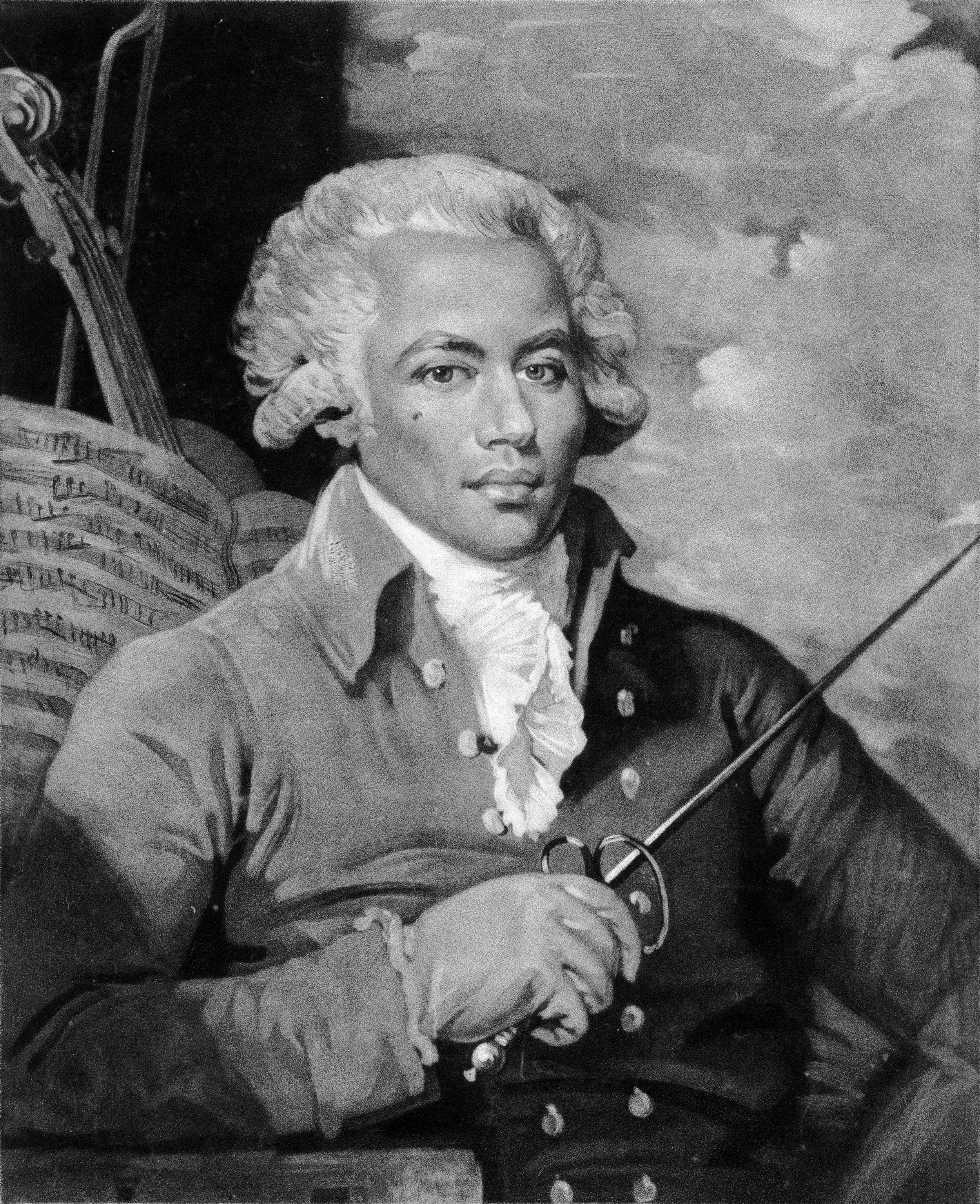
By William Ward / After Mather Brown - This image has been extracted from another file, Public Domain, https://commons.wikimedia.org/w/index.php?curid=25539884
Dynamics – considering that this music was written in the Classical Period there must be a degree of restraint when applying the dynamics. The dynamics used in this piece should range from pianissimo to fortissimo with the majority of the dynamics in the mezzopiano to mezzoforte range. Careful thought must be given to the L.H.’s dynamics; a small change in the L.H.’s dynamics will make a considerable difference to the overall dynamics. The crescendo in bars 4 and 27 should be subtly played; the loudest note need not be the final one of the patterns.
Balance between the hands – in the outer sections the balance should be to the R.H. however the L.H., as already mentioned, has a melodic role in parts of the second section. When playing the L.H. melody where it is playing a third or sixth lower, the L.H. should sound a little quieter. The third chords at the end of the middle section should not be played too loudly; the balance needs to be to the R.H. at this point.
Agogic effects – the player should not linger too long where the fermata is placed at the end of the middle section. This bar should not contain three beats so the rest should be extended by a small amount. Regarding the rit. in the penultimate bar, again this should not be particularly emphasised. A small slowing down is appropriate.
Considerations when playing this piece –
· There is a danger that the semiquaver pattern could accelerate, and this would affect the subsequent speed.
· There needs to be a degree of resonance on the first R.H. note of bars 1 and 5, for example.
· The L.H.’s dynamics are particularly significant in the last phrase.
· Here is an excellent opportunity to show the player the use of scale patterns in music.
· In bars 8 and 31 both hands must move into position simultaneously.
· The player must consider how long to wait at the end.
· The semiquaver patterns in bars 4 and 27 are important as they link the first and second phrases.
· This piece is an excellent lesson in harmony.
· The L.H. could be practised as a group in the outer sections.
· The ending is definite and purposeful.
· Bars 7 and 8 should not sound as if they are the ending.
· The player must be careful with the level of the L.H.’s dynamics in bar 21.
· The player must look ahead in bars 10 and 14; they should look where the hands are required to move to and then move the hands to where they are looking.
· In bars 11 and 15 a small emphasis on the first note of these bars is appropriate.
· Because the first and last sections are the same, the dynamics must be differed so that the listener is provided with interest.
· In the middle section it sounds as if the person is taking time to make a point.
· In bars 16 – 21 the player should ensure that they do not accelerate as well as in the scale passages.
· The rall at the end of the music contributes to the grandeur of the ending.
· It is very important that the first note is heard very clearly as there is a danger that the first R.H. note does not sound.