
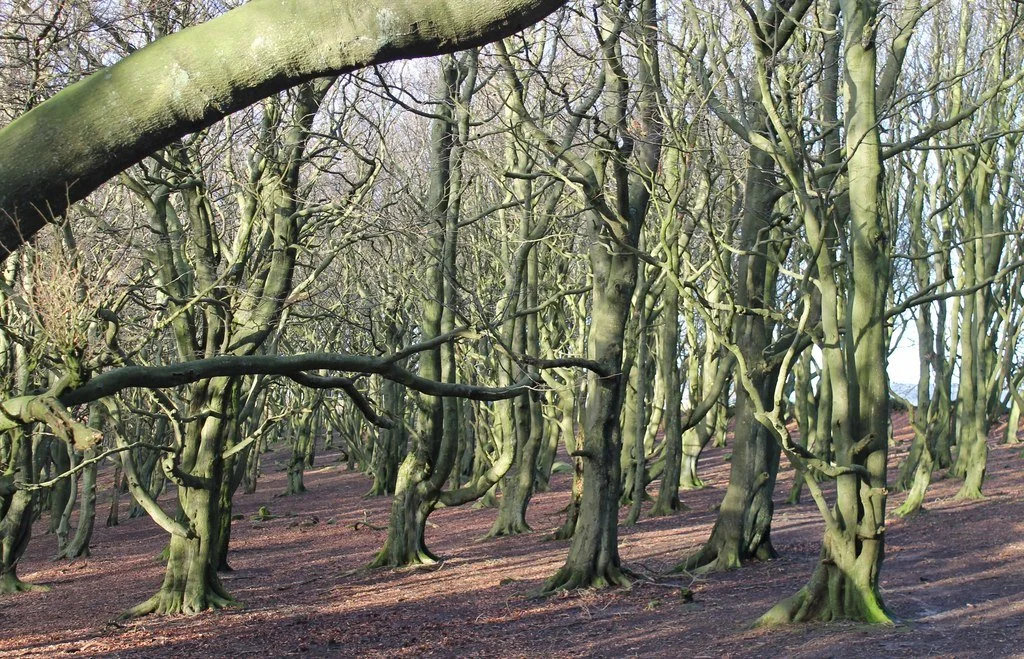
By 'Spooky Wood,' Stocksbridge by Dave Pickersgill, CC BY-SA 2.0, https://commons.wikimedia.org/w/index.php?curid=131998462
Spooky Wood Hollow Heather Hammond Grade 1 ABRSM 2025 – 2026
Story/character of the piece – this piece has a wonderful title which the player can use to stimulate their imagination. The L.H. could represent the person’s footsteps with the other melodic patterns being the person’s imaginative responses to their environment. Perhaps the player could invent some words that accompany the melodic patterns that the R.H. plays, for example in bars 5 – 12 and the L.H. in bars 8 and 12. In bars 13 – 18 the person’s imagination runs riot; they are imagining all kinds of scary things.
Form - this piece commences with an introduction of four bars that introduces the scary and suspenseful character. The first section, beginning at bar 5, continues until bar 12. The middle section, from bars 13 – 20 contains different material to the first and third section. The third and final section starts at bar 21. This piece is in the key of A minor however by the end of the first section, it is in the key of E minor. There are some lovely chromatic passages in this piece. In the second section the key returns to A minor. The final section remains in A minor although there is the same movement to E minor. The final bar emphasises the key of A minor with the use of the melodic minor in the R.H.
Main part of the music – as indicated by the composer, this should occur in the last bar. The composer has written fortissimo and sfz; the player is left under no illusion whatsoever as to what dynamics should be used. Each section should have a focal point too.
Phrasing – this piece contains seven phrases; the first phrase encompasses the introduction. From there, each set of phrases has a question-and-answer format and in each case, the second phrase of the set commences with the same material as the opening of the first section before moving into the playing of different material. Apart from phrases four and five, the other sets of phrases overlap between each one. The fifth phrase, the one at the end of the second section is shorter because there is a longer lead-in to the sixth phrase.
Tempo, time signature and rhythmic patterns – the suggested speed of 116 crotchet beats per minute is completely appropriate, as too fast a tempo will destroy the suspense and drama that it requires. Conversely, too slow a tempo will mean that the music sounds dull and laboured. The quadruple time signature ensures that the piece has space and length to the phrases; again, this contributes to the character it requires. This piece requires careful attention to the correct realisation of the rhythmic patterns, so knowledge of the rhythmic patterns before learning the notes is advisable. This could be a player’s first exposure to the use of syncopation and there is a danger, that notes could be played on the beat rather than at the end of the beat. This could occur, for example in the R.H. in bar 6, where the A could be played on beat four rather than at the end of beat three. And another example occurs in bars 14, 16 and 18 where the R.H. chords could be played on beat four. In bar 7, for example, beat three must be felt, as is the case in the final bar. Constant and considerable use of the metronome is to be advised when learning and maintaining this piece.
Touch/articulation – the touch in the R.H. should be a slightly weighted one and the detached notes should not be too staccato. The notes at the end of the R.H. patterns, such as the last C in bar 5 need to be lifted with the finger in contact with the key. This approach will provide the music with a kind of ‘slithering’ sound one that will contribute to the character of the music. On occasion, the L.H. is required to take on the R.H.’s role such as in bar 8, as it takes on the R.H.’s role and connects it with the subsequent phrase. A different approach is required in bars 13 – 18, as the music should sound as if only one hand is playing. These notes and chords must be played with a degree of resonance. The single L.H. notes are required to be played with some resonance; the degree will depend on the context. The are numerous articulation marks that must be observed, for example there are staccato dots and accents. Some of the accents are combined with staccato dots. A lift in the L.H. prior to the playing of the DN is a stylish addition, as it lets the L.H. lead into the following bar. The staccato crotchets should not be played too detached.
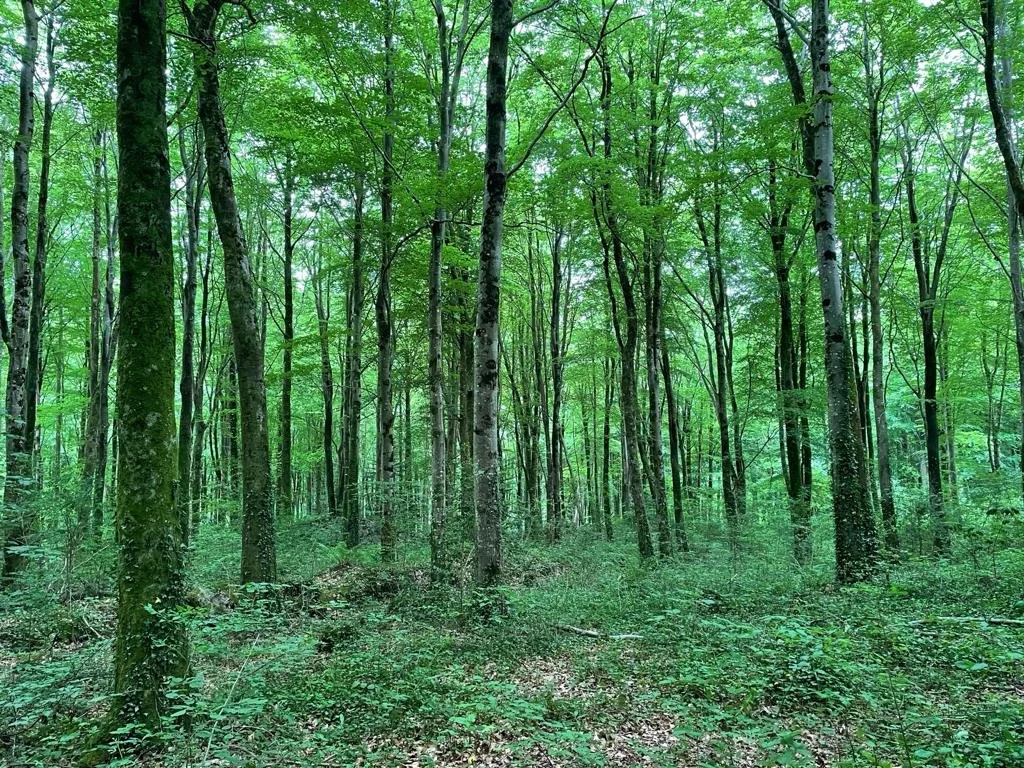
By Jerfree72 - Own work, CC BY-SA 4.0, https://commons.wikimedia.org/w/index.php?curid=107135529
Dynamics – this piece presents the player with an opportunity to employ a wide range of dynamics from ppp to fortissimo. The louder dynamics should never sound harsh or strident. Some players may find it a little difficult to control the playing of the quieter dynamics as there is a danger that these notes may not sound with enough resonance or even sound at all. Tone control is an essential element when playing this piece, especially as there are instances where there are rests in both hands simultaneously. Here the player must perceive the level of the remaining sound and use this as a guide for the dynamics of the subsequent phrase. It would be wise to add some more dynamics to this piece. The dynamics provide drama and suspension to the music.
Balance between the hands – the balance is constantly changing throughout this piece. In the opening bars, the balance needs to be to the R.H. although the L.H. notes need to be resonant and purposeful. However, there are areas where the balance is the same, for example in bars 8, 16 and so on. In bar 8, the L.H. blends with the R.H. on beat two before continuing with the crescendo as shown.
Rubato – this should not be applied in this piece; in some areas the composer has written this in with rests occurring in both hands simultaneously.
Considerations when playing this piece –
· The rests are an integral part of the music.
· At the end the pedal should be applied with subtlety and the player needs to consider howe long to wait until the hands and pedal are lifted neatly.
· The fingering in bars 8 and 24 could be changed to 3 2 1 2.
· The first part is setting the scene.
· The L.H. takes on a more prominent role during the second half.
· During the minim rest in bar 12, what is happening in the listener’s mind?
· There should be an element if restraint during most of this piece and this would result in a surprise when the louder dynamics are used.
· When thinking of the footsteps, when the dynamics are louder does this mean that a floorboard has creaked for example?
· It would be wise to not use the fortissimo dynamic too soon in the piece.
· The player must consider how loud to play the first L.H. note in bar 20.
· Sudden changes in dynamics will be appropriate when playing this music.
· The player must consider how long to wait at the end before lifting their hands and the pedal simultaneously.
· Regarding the final R.H. chord, the player should move the R.H. no. 1 into position and the other fingers should be able to ‘follow suit’.
· There should be a larger range of dynamics at the end.
· The highest note of a melodic pattern need not be the loudest.
· There is a kind of ostinato bass at times.
· The player needs to consider what to do with their R.H. at the beginning.
· There should be no accent on the first note in the patterns such as the one in bar 5.
· The teacher and pupil could each play a hand.
· The player should avoid being predictable when applying the dynamics.
· Some of the phrases have a ‘cross-over’ effect.
· On many occasions the music feels as if it is ‘feeding off each other’.
· Why is pedal used in the final bar? This will allow the sound to remain for a reasonable amount of time.
The player must consider what to do with their R.H. during the first four bars.