
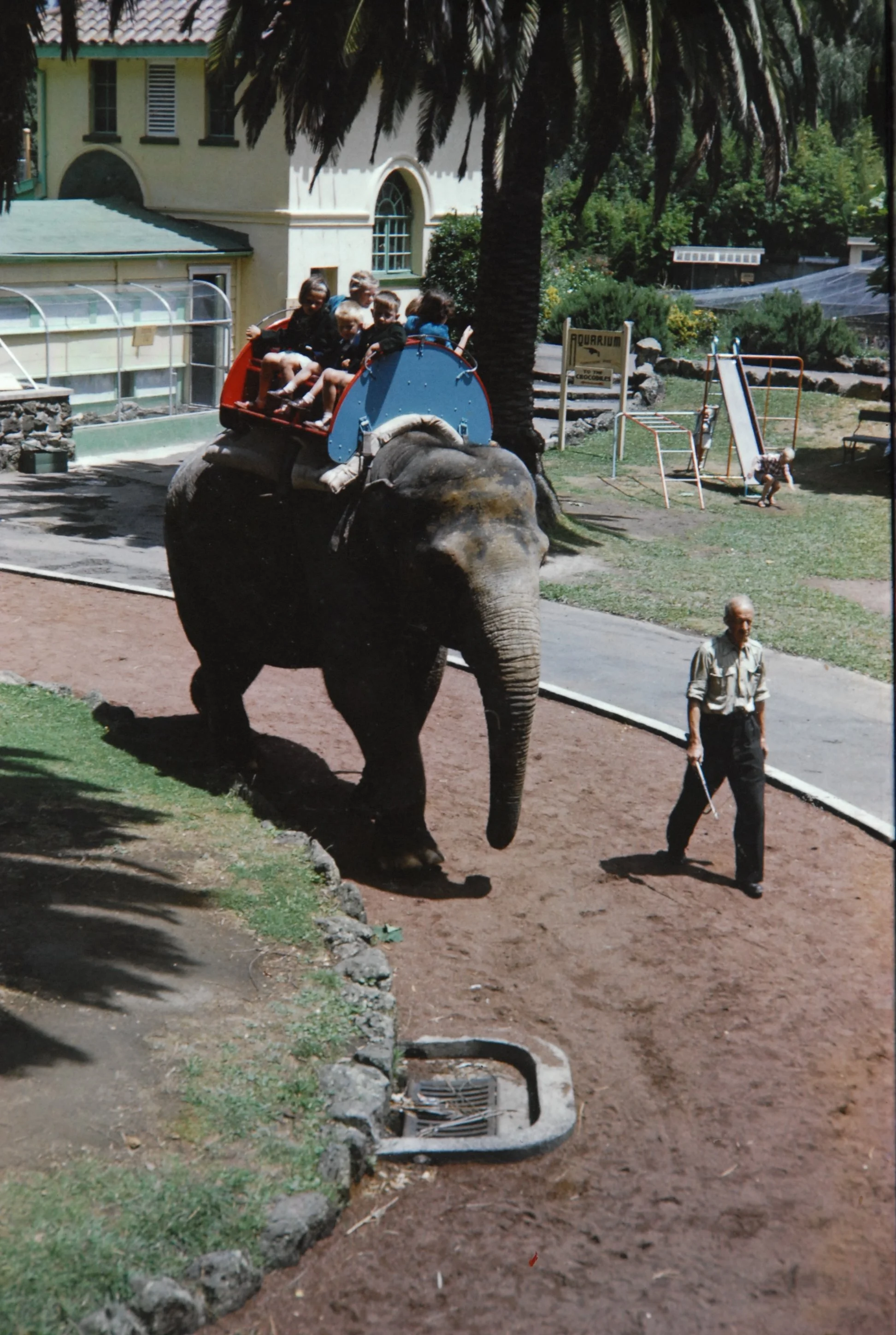
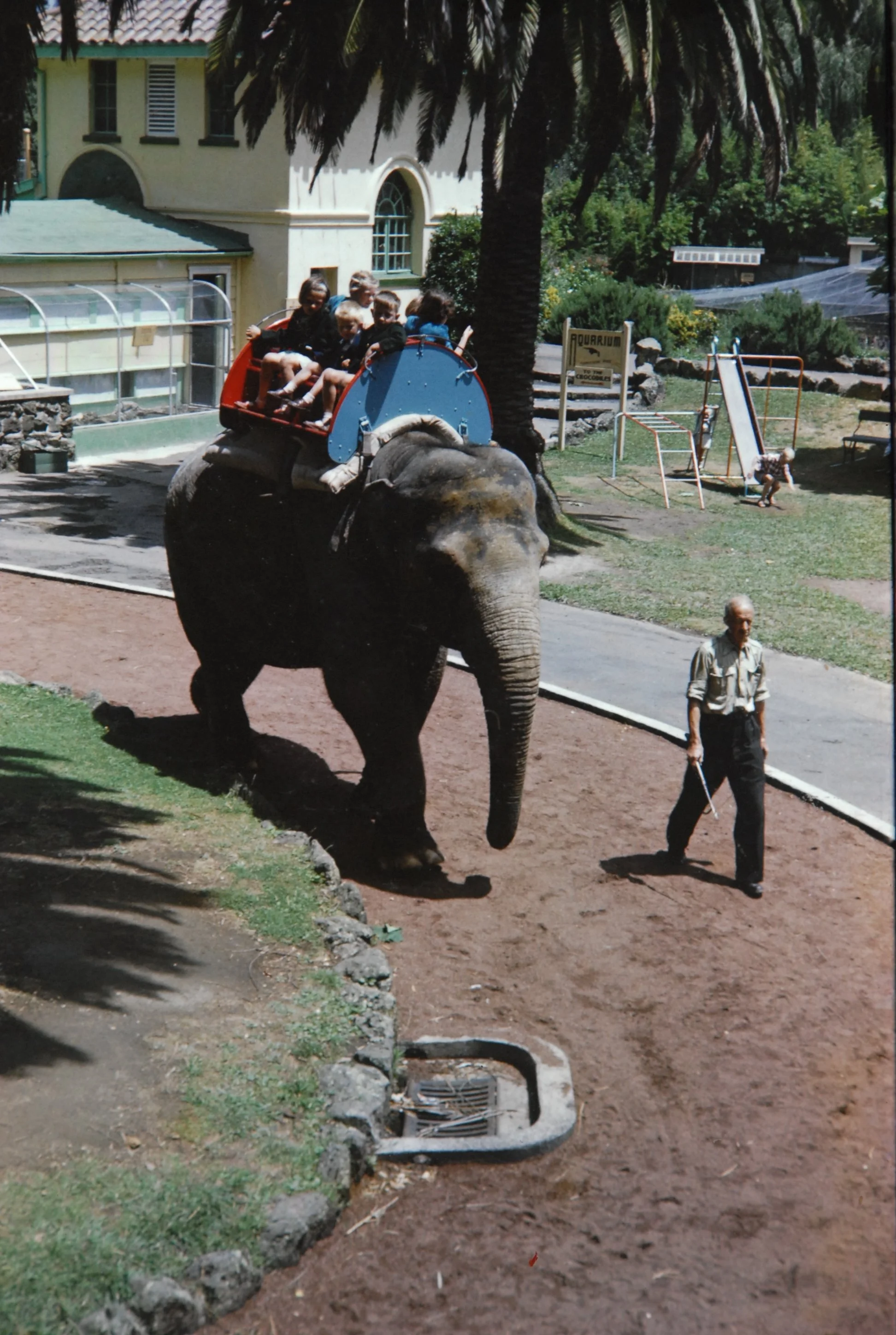
Photo from personal collection.
The Elephant Herd June Armstrong Initial ABRSM 2025 – 2026
Story/Character of the piece – obviously the main starting point for the interpretation for this piece is the title. The player should devise a story and/or have a picture in their mind as to what the elephants are doing. The L.H. could represent the elephants’ walk and the R.H. could represent the movement of the herd. At times the herd is more stationary than other times.
One suggestion – first phrase – the elephants are located, second phrase – they disappear momentarily, third phrase – the elephants are coming closer and moving faster, fourth phrase – the elephants are very close and stop at the end.
Form – this piece is episodic in style with the first, second and fourth phrases containing similar material. The third phrase acts as a contrast to the others with an altered L.H. and a R.H. that is more ‘energetic’.
Main part of the music – this should occur in the penultimate bar with the L.H. chord played at a fortissimo level. Even so, the player should ensure that the dynamic level does not result in a strident or harsh tone.
Phrasing – there are four phrases in this piece, each being four bars long. All phrases commence with the same L.H. chord, so the player must be conscious of how the phrases move from one to the other dynamically. There must be a link from one phrase to the subsequent one throughout the piece.
Time signature/tempo and rhythmic patterns - the quadruple is the best choice, as a triple or duple time signature would not convey the lumbering and ponderous movement of the elephants. The tempo suggestion is c.90 crotchet beats per minute, and this is emphasised by using the word ‘heavily’. This is an appropriate tempo; it provides enough to momentum to portray the movement of the herd but not so much to be unrealistic. There is a danger that once the piece is known that it will accelerate. There should be no rhythmic patterns that will cause concern when playing this piece however players must be conscious of acknowledging the R.H. rests.
Articulation/Touch – this is an opportunity for the player to learn about the use of the whole arm and shoulder when playing this piece. Shoulder weight will need to be used so that the longer chords/notes are heard for their full length. The L.H. chords in the third phrase should be played as legato as possible, making sure that they are held for as long as possible. There is a danger that the player may lift the R.H. when playing bars 8 -12; these notes must be played legato even though the L.H. is lifting on beats 2 and 4, except for bar 4 and 8. The staccato chords must be slightly detached; if they are played with an energetic staccato it will not be appropriate for the character of the piece.
Dynamics – as already described, there is a danger that the louder dynamics in this piece could be played with harshness or stridency. The player must guard against this ensuring that shoulder weight is employed. Perhaps a slightly wider range of dynamics could be used, even dropping to pianissimo for example at the start of the second phrase. Perhaps the player is witnessing the elephants from further away? And, in the louder areas the elephants are closer and more visible. In addition to this, the player needs to consider howe the hands work in with each other. For example, in bar 1 the R.H. should not be played too loudly in comparison with the L.H. Should it merge with the remaining L.H. sound or be played a little louder than the remaining L.H. sound? Wherever there are repeated melodic parts the dynamics must be altered so that the listener’s interest is maintained. The dynamic level of the L.H. is crucial for the overall dynamics of the piece. Tone-matching is an important skill when playing this piece.
Considerations when playing this piece
· Considering that mostly younger candidates will be playing this piece it would be wise to consider where they sit at the piano when playing it. A small amount of movement to the left would be appropriate.
· The player should ‘enjoy’ the dissonances.
· This piece could be pedalled, for example the first L.H. chord in bar 1 could be provided with a ‘dab’ of pedal. Some players may not be able to reach the pedals.
· There could be a little slowing at the end.
· Has a slight sinister feel.